

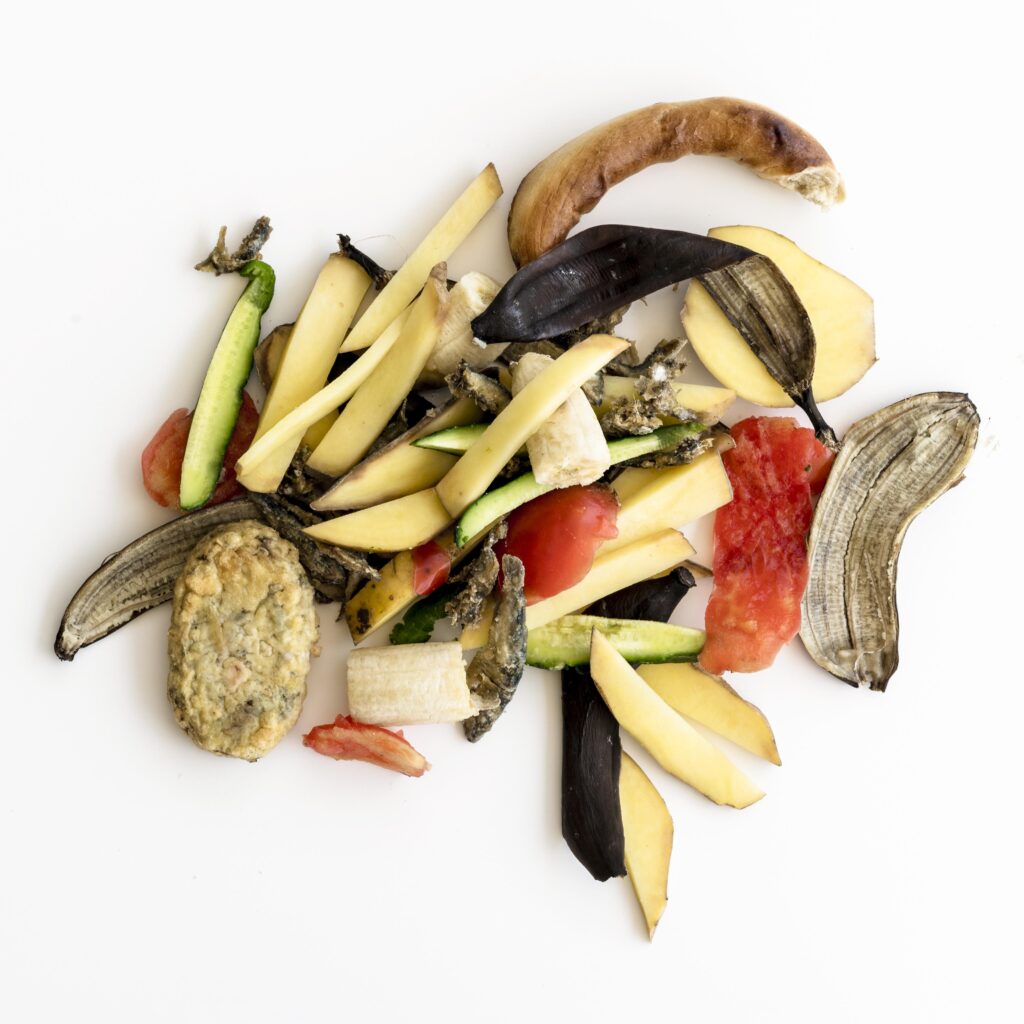
How is diet quality connected to food waste among Canadian families?
This study examined whether the quality of parents’ and children’s diets was associated with the amount and type of food waste produced by Canadian families with young children.
What We Did and Why We Did It
We analyzed data from 85 families with young children living in the Guelph-Wellington area of Ontario who participated in the Family Food Skills Study. Parents completed 3-day food records for themselves and their child, which were used to calculate diet quality scores using the Healthy Eating Index-2015 (HEI-2015). Household food waste was measured through detailed waste audits conducted over 3–4 weeks, where researchers collected, sorted, and weighed discarded food items to identify avoidable and unavoidable waste.
Food waste is a major environmental and economic concern, with households contributing a large proportion of avoidable food waste. Previous research suggested that families with healthier diets may produce more food waste, particularly from fruits and vegetables. Understanding the relationship between diet quality and food waste can help identify strategies that support both healthier eating habits and reduced food waste.
What We Found
What We Can Learn From This
Most parents (81%) and children (82%) had diet quality scores in the “Needs Improvement” category. Families produced an average of 107 grams of avoidable food waste and 52 grams of unavoidable food waste per person each day. Fruits and vegetables were the largest contributors to food waste, accounting for 65% of avoidable food waste. Overall diet quality was not associated with total food waste; however, parents with higher diet quality scores produced more avoidable and unavoidable fruit and vegetable waste.
Families who prioritize healthy eating may purchase and prepare more fruits and vegetables but may also experience challenges using all of the food they buy before it spoils. Strategies such as better meal planning, food storage practices, and creative ways to use leftover produce may help families improve diet quality while reducing food waste.
Read the full article published here:
Related Family Resources: