
How does stress affect weight and health among parents of young children?
This study examined whether different types of stress, including general stress, parenting distress, and household chaos, were associated with measures of body fat and weight among parents of young children.
What We Did and Why We Did It
We analyzed data from 110 parents (49 mothers and 61 fathers) from 70 families participating in the Guelph Family Health Study. Parents completed questionnaires measuring general stress, parenting distress, and household chaos. Researchers also assessed parents’ body composition using measures including body mass index (BMI), waist circumference, waist-to-height ratio, and percent body fat. Statistical analyses were used to examine whether stress levels were associated with adiposity measures while accounting for factors such as age, sex, household income, and family size.
Parents of young children often experience many competing demands, including childcare responsibilities, changes in routines, and balancing family and work obligations. Chronic stress can influence health through changes in eating habits, physical activity, sleep, and biological processes that may increase the risk of overweight and obesity. Understanding how different types of stress affect parents’ health can help inform strategies to support family well-being.
What We Found
What We Can Learn From This
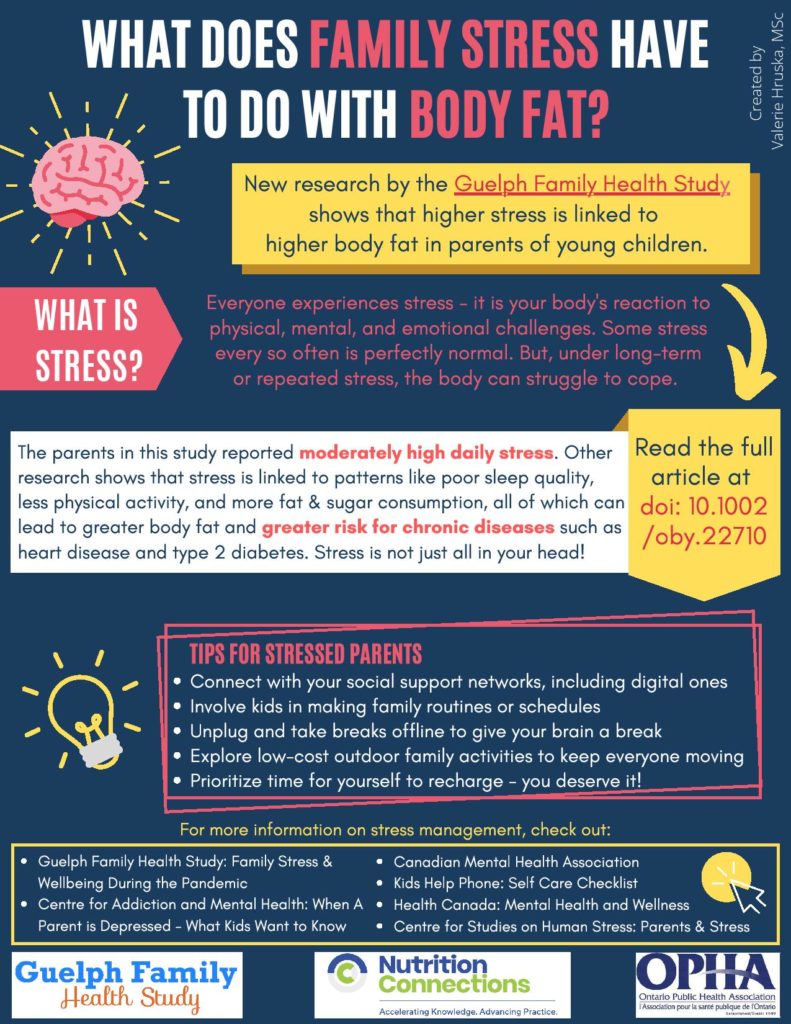
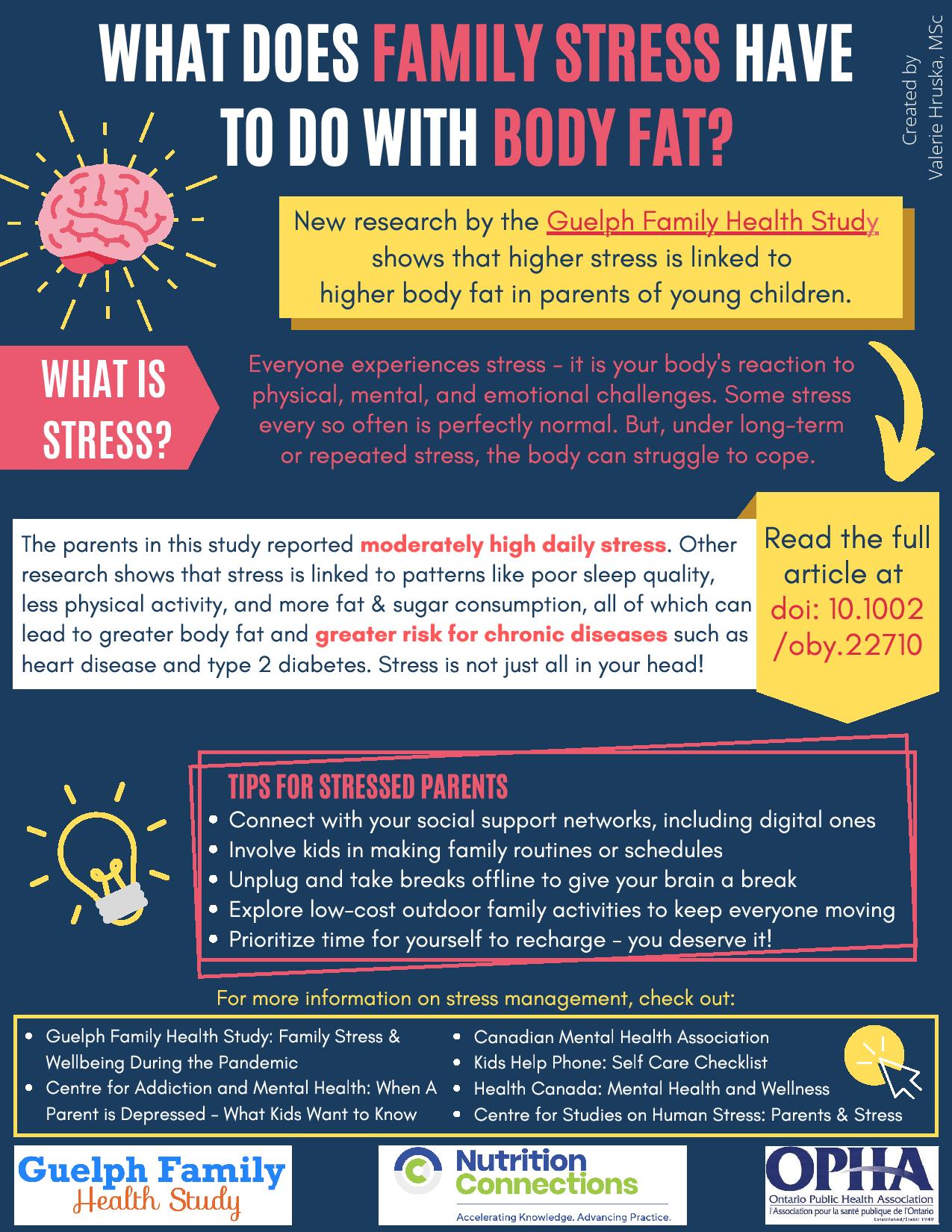
Parents reported moderately high levels of stress across all three measures. Higher levels of general stress were associated with higher BMI and waist circumference. Greater parenting distress was associated with higher BMI, waist circumference, and waist-to-height ratio. Household chaos, including feelings of disorganization, noise, and lack of routine in the home, was associated with all measures of adiposity, including BMI, waist circumference, waist-to-height ratio, and percent body fat. These associations were similar among both mothers and fathers.
Stress and the home environment may play an important role in parents’ health. Supporting parents with strategies to manage stress, create predictable routines, and balance the demands of family life may help improve health outcomes for the entire family. Programs that support stress management alongside healthy eating, physical activity, and sleep habits may be especially beneficial for families with young children.
Read the full article published here:
Related Family Resources: