
How do parents’ screen habits and rules influence young children’s screen time?
This study examined how mothers’ and fathers’ media parenting practices, such as setting limits, monitoring screen use, and using screens during meals, were associated with screen time among young children.
What We Did and Why We Did It
We analyzed data from 62 children aged 1.5 to 5 years and their parents who participated in the Guelph Family Health Study. Parents completed questionnaires about their media parenting practices, including screen time monitoring, limit setting, screen use during meals, and using screens to manage behaviour. Researchers then examined how these practices were associated with children’s weekday and weekend screen time.
Screen-based sedentary behaviour is common among young children and has been linked to health concerns, including increased risk of childhood obesity. Parents play an important role in shaping children’s behaviours, but previous research has focused mostly on mothers and television use. Researchers wanted to better understand how both mothers’ and fathers’ parenting practices influence children’s screen habits in today’s environment of tablets, smartphones, and other digital devices.
What We Found
What We Can Learn From This
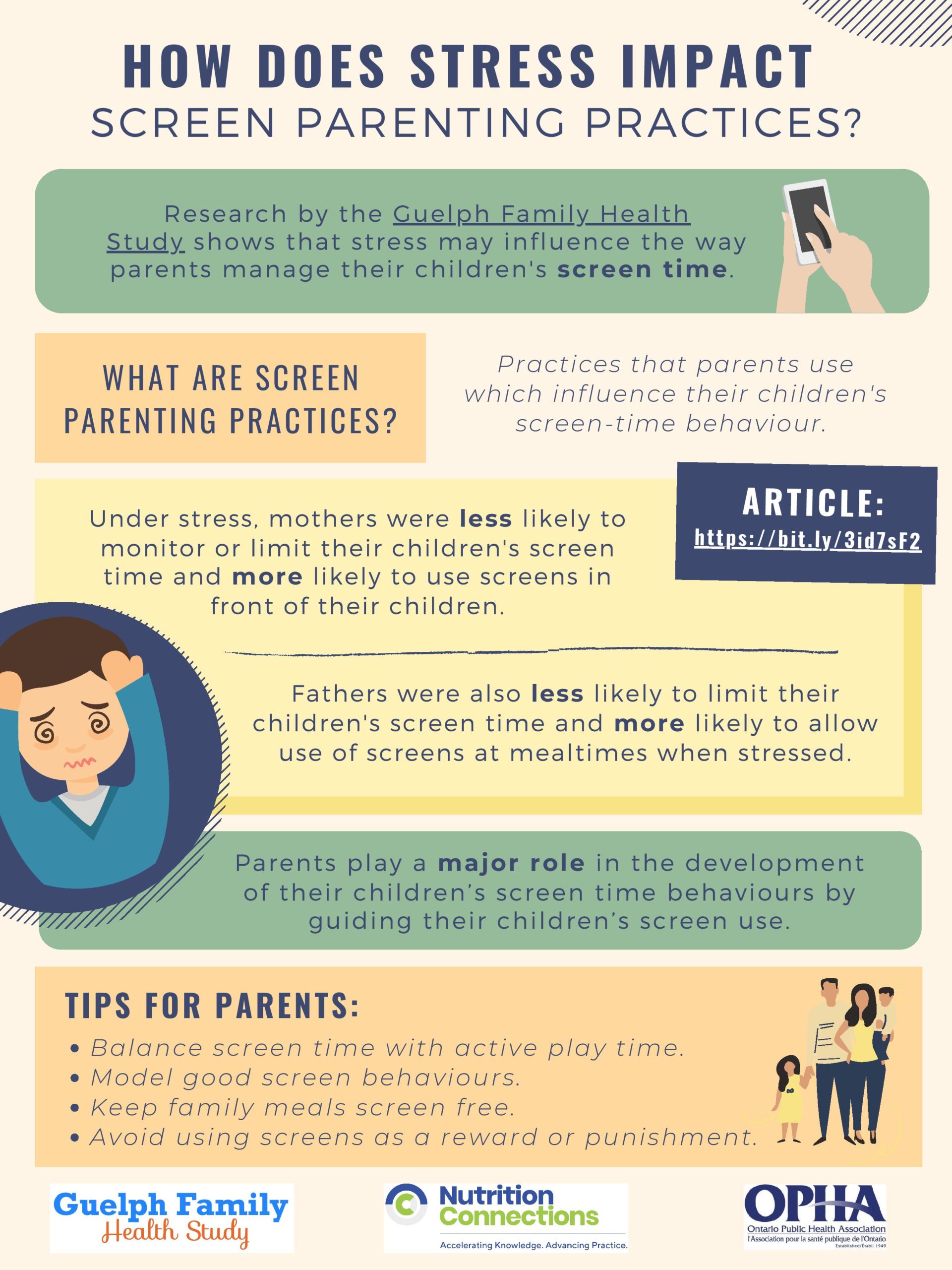
Both mothers’ and fathers’ media parenting practices were associated with children’s screen time. Children had more weekday screen time when mothers used screens in front of them, allowed screens during meals, or used screens to control behaviour. In contrast, children had less screen time when mothers monitored and limited screen use. Among fathers, allowing screens during meals was associated with more weekday screen time, while monitoring and setting limits were associated with less screen time. Fathers’ use of screens to control behaviour was also linked with more weekend screen time.
Parents can influence young children’s screen habits through everyday routines and boundaries. Strategies such as setting clear limits, monitoring screen use, and reducing screens during meals may help children develop healthier screen behaviours. These findings highlight the importance of including both mothers and fathers when designing programs to reduce excessive screen time.
Read the full article published here:
Related Family Resources: