How much sugar are young children getting from snacks and beverages?
This study explored how much free sugar preschool-aged children consume from snacks and beverages and identified the main sources contributing to their sugar intake.
What We Did and Why We Did It
We analyzed dietary data from 267 preschool-aged children (1.5–5 years old) participating in the Guelph Family Health Study. Parents completed a 24-hour dietary recall using the Automated Self-Administered 24-hour Dietary Assessment Tool (ASA24). We examined how much free sugar children consumed from snacks and beverages and identified the foods and drinks that contributed the most sugar to their diets.
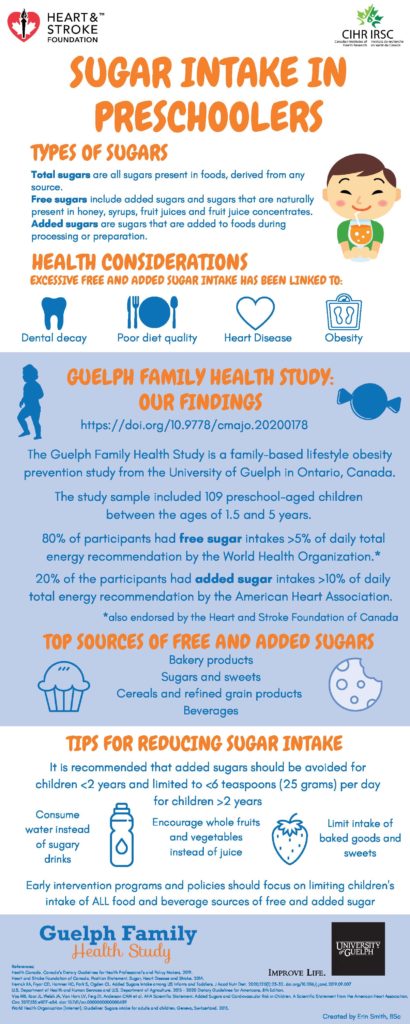
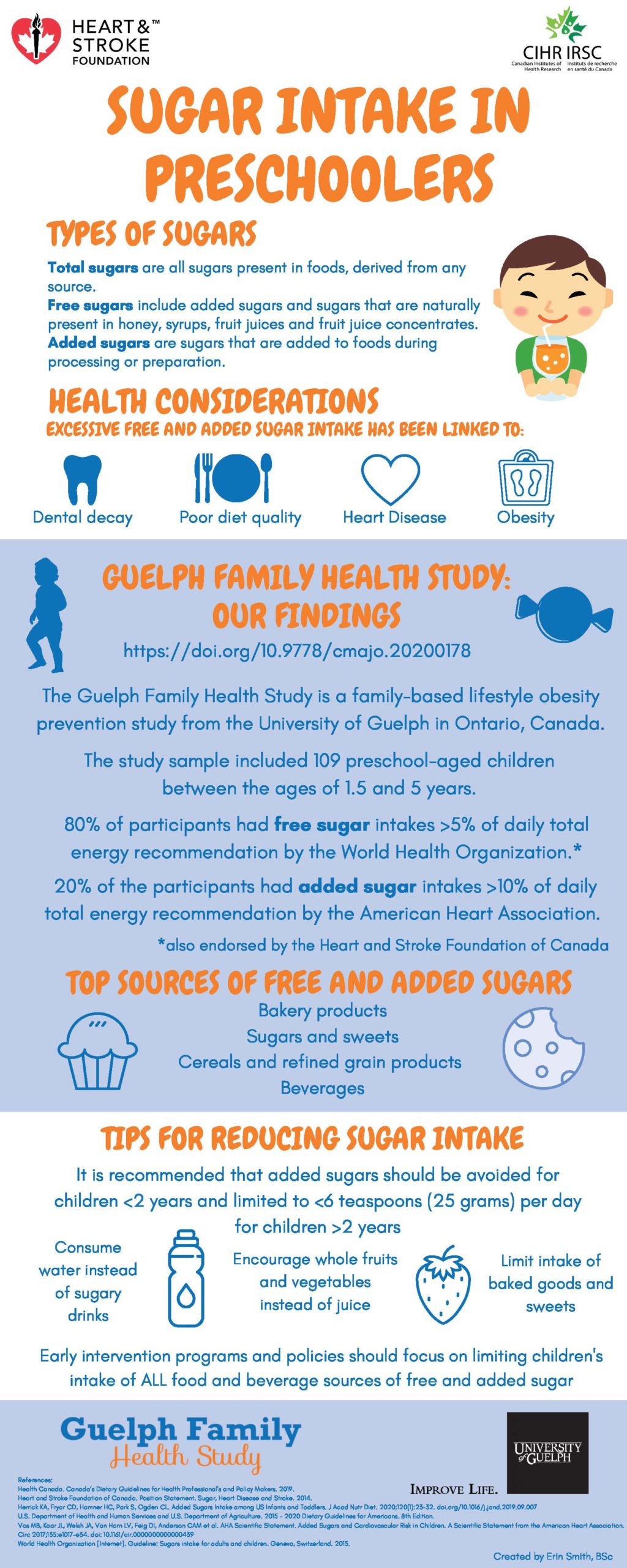
High intake of free sugars during childhood can increase the risk of dental cavities, unhealthy weight gain, and poorer diet quality. While young children often consume more sugar than recommended, less is known about which snacks and beverages contribute the most sugar. Understanding these sources can help guide strategies to support healthier eating habits early in life.
What We Found
What We Can Learn From This
Free sugar contributed an average of 10.6% of children’s total daily energy intake. Snacks and beverages together accounted for nearly half of children’s free sugar intake. About 30% of children consumed at least 5% of their daily energy from free sugar in snacks, while 17% consumed at least 5% of their daily energy from free sugar in beverages. The largest snack sources of free sugar were bakery products, candy and sweet condiments, and sugar-containing beverages. Among beverages, 100% fruit juice and flavoured milk were the biggest contributors to free sugar intake.
Small changes to common snacks and beverages can help reduce children’s free sugar intake. Choosing options like whole fruits, vegetables, water, plain milk, and unsweetened dairy products more often, while reducing sugary snacks and drinks, can help improve diet quality and support healthy growth.
Read the full article published here:
Related Family Resources: