
How do gender roles influence participation in family health programs?
This study explored how gender roles and expectations within families can influence participation in family-based health interventions and affect how health responsibilities are shared between parents.
What We Did and Why We Did It
We conducted a qualitative study with 20 families and 4 health educators participating in the Guelph Family Health Study. Researchers collected data through semi-structured interviews, observations of 11 home visits, and observations of a health educator training session. The data were analyzed to understand how gender, sexuality, and family relationships influenced participation in a family health intervention.
Family health programs often rely on parents to make changes related to children’s nutrition, physical activity, sleep, and other health behaviours. However, health responsibilities are not always shared equally between family members. Understanding how gender roles and expectations influence participation can help researchers design more inclusive interventions that support all caregivers and avoid reinforcing existing inequalities.
What We Found
What We Can Learn From This
Participation in the Guelph Family Health Study was often led by mothers, who typically managed communication, scheduling, goal setting, and health-related tasks for their families. Some mothers experienced increased stress as they took on additional responsibilities related to improving family health. Fathers were more likely to be less involved, often citing paid work responsibilities as a reason for reduced participation. Health educators, who were all women, sometimes found themselves navigating family dynamics and being viewed as sources of support beyond their role as health educators.
Family health interventions need to consider the social and gender dynamics that influence who takes responsibility for health-related tasks at home. Creating programs that actively engage all caregivers and address broader societal factors that shape family roles may help make health promotion efforts more equitable and effective.
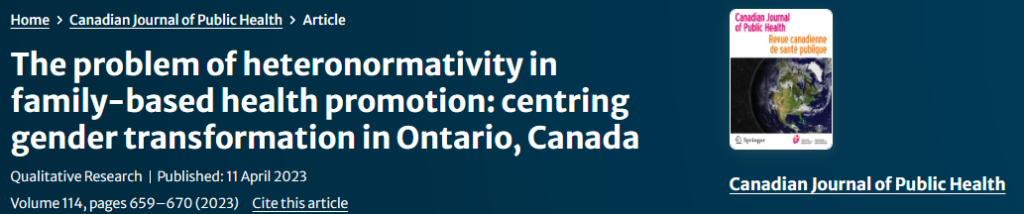
Read the full article published here:
Related Family Resources: