
How do family and child characteristics influence sugar intake in preschool-aged children?
This study examined how child and parent sociodemographic characteristics, such as age, ethnicity, and household income, are associated with sugar intake among preschool-aged children.
What We Did and Why We Did It
We analyzed data from 267 preschool-aged children participating in the Guelph Family Health Study using parent-completed questionnaires and a 24-hour dietary recall. We examined children’s total, free, and added sugar intakes and explored how factors such as child age, sex, ethnicity, parent education, years living in Canada, household income, and marital status were related to sugar consumption.
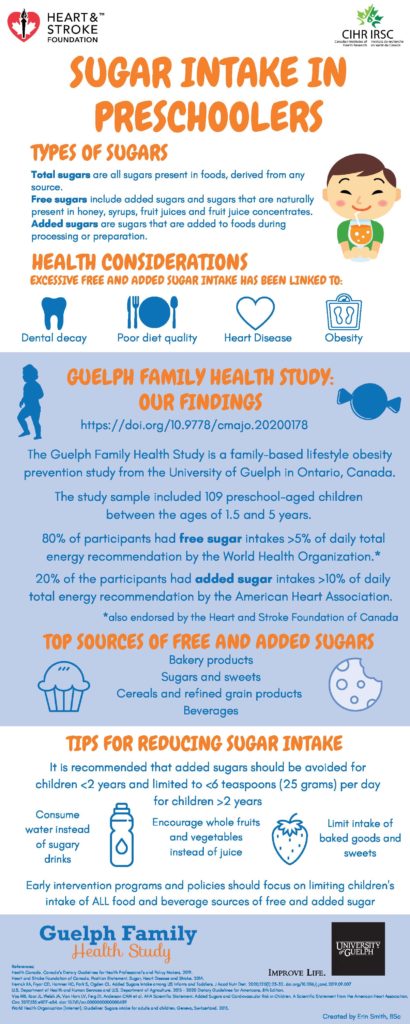
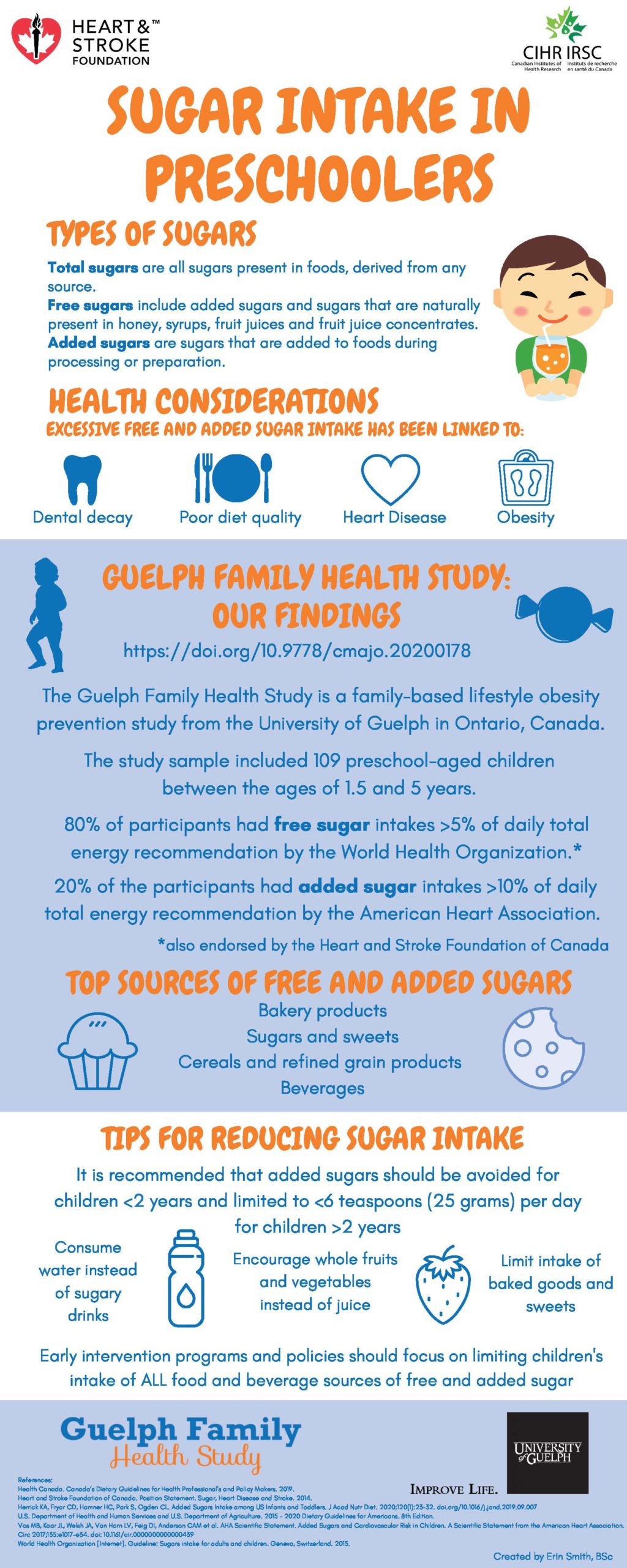
Young children often consume more sugar than recommended, which can affect diet quality and contribute to health concerns later in life. Understanding how family and child characteristics influence sugar intake can help researchers and health professionals develop targeted nutrition strategies and interventions that support healthier eating habits early in life.
What We Found
What We Can Learn From This
Older children consumed more free and added sugars compared to younger children. Children’s ethnicity and household income were also linked to sugar intake, with children identifying as white having higher total sugar intake compared to children of other ethnicities, and children from higher-income households consuming less free sugar. Other characteristics, including child sex, parent education, years living in Canada, and marital status, were not significantly associated with sugar intake in this study.
Children’s sugar intake is influenced by a variety of factors, including characteristics of both the child and their family environment. Supporting families with accessible, early nutrition education and strategies to reduce sources of added and free sugars may help establish healthier eating patterns during childhood.
Read the full article published here:

Related Family Resources: