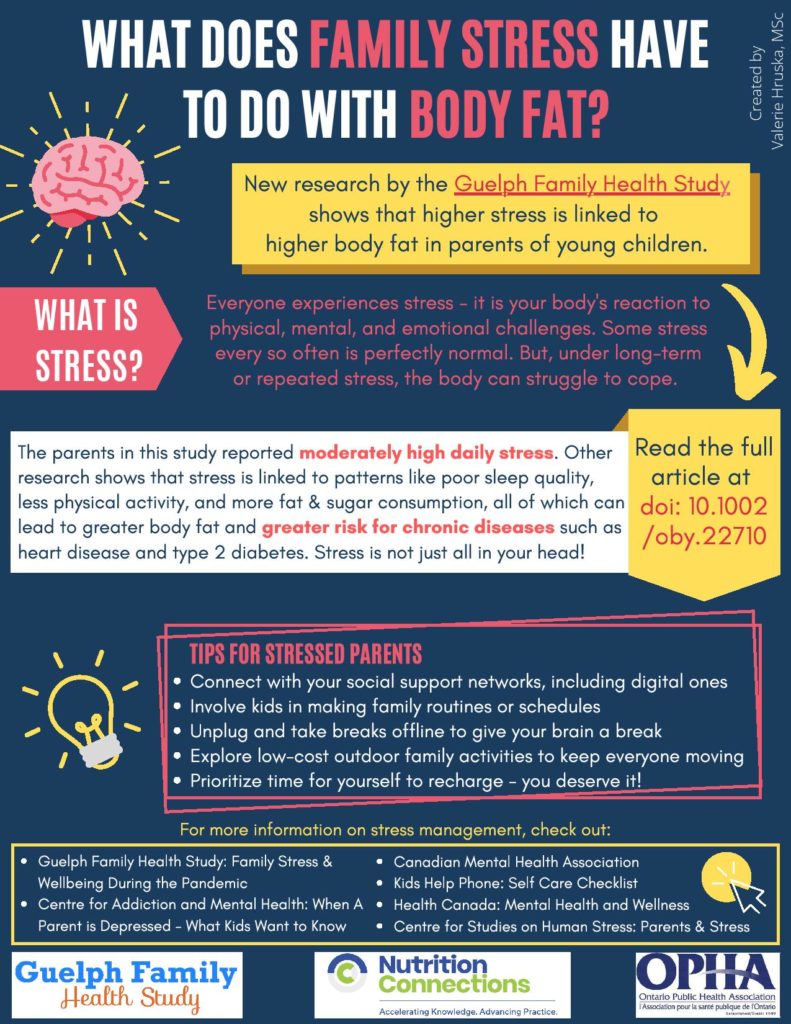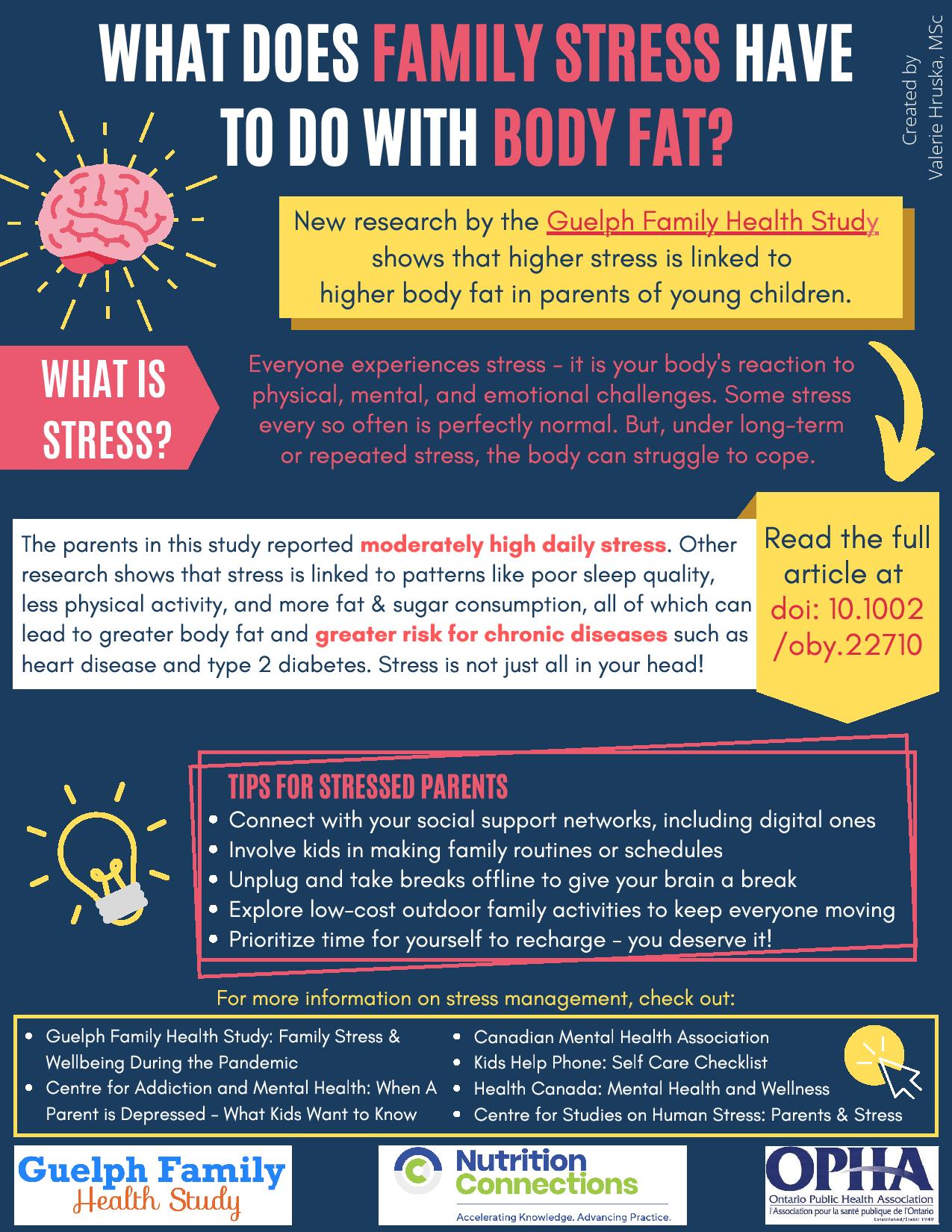

How Does Chronic Stress Influence Weight Gain and Health Behaviours in Young Children?
The Family Stress Study is a two-year study exploring how chronic stress, biological responses, and health behaviours may contribute to weight gain and obesity risk among young children.
What We Did and Why We Did It
We followed 359 families from Guelph and Hamilton, Ontario, with children aged 2–6 years over two years. Families completed questionnaires about stress, family environment, diet, physical activity, sleep, and child behaviours. Researchers also collected information on children’s growth measurements, activity levels, and hair samples to measure cortisol, a marker of chronic stress.
Research shows that chronic stress may increase the risk of excess weight gain in children, but the pathways behind this relationship are not fully understood. This study was designed to better understand how biological factors (such as cortisol levels) and behaviours (such as eating patterns, physical activity, and sleep) may connect family stress with childhood weight outcomes.
What We Found
What We Can Learn From This
This paper describes the study design and the characteristics of the families who joined the study. Researchers successfully recruited 359 families despite challenges caused by the COVID-19 pandemic, using remote data collection methods to gather information on children’s health, behaviours, and family stress. The collected data will be used in future analyses to examine how stress may influence children’s growth over time.
By understanding the relationship between stress and childhood health, researchers can identify important factors to target in future obesity prevention programs. These findings may help create more effective supports for families experiencing stress and promote healthy growth in young children.
Read the full article published here:

Related Family Resources: